
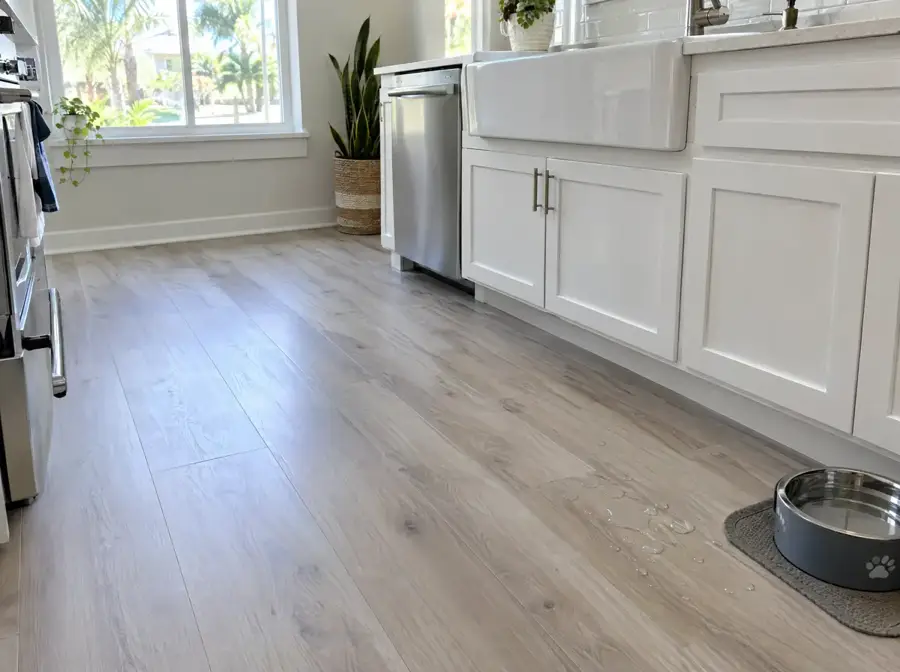
- Carpet, laminate and wood are the floors most likely to suffer in a humid, empty house.
- Rigid core vinyl plank is waterproof, and some makers allow it in homes left without climate control for long stretches, for floating floors only.
- Extension services advise keeping the AC set no higher than 85 degrees and shutting off the water while you are away.
- Waterproof covers humidity, spills and a damp slab; standing floodwater is a different matter.
What a closed-up house does to a floor
A home on this coast that sits empty from late spring to fall is living through the wettest, hottest months of the year with nobody inside. The air conditioner may run less, doors stay shut, and moisture has hours and weeks to settle into anything that will hold it.
The University of Florida’s extension service describes what many seasonal owners find when they come back: mildew on walls, clothing and furnishings, musty smells, and rust spots on appliances. It explains why. Florida is warm and humid, and mildew and bacteria feed on organic materials. Floors are some of the largest organic surfaces in a house, which is why the floor is often where the smell lives.
The EPA’s guidance on mold sets a clear target for indoor air: keep relative humidity below 60 percent, and ideally between 30 and 50 percent. A closed house that drifts above that for a whole summer gives mildew exactly what it needs.
How common floors handle a closed summer
Each floor type reacts to a humid, empty summer in its own way. Here is the short picture.
- Wall-to-wall carpet. The fibers, the pad and the dust in them all hold moisture and organic matter. It is the most common source of the musty smell owners notice on the first day back.
- Laminate. The top looks like wood, but the core is a wood-fiber board. Humidity and any water that reaches the seams can make the edges swell and peak.
- Solid and engineered wood. Wood takes on and gives off moisture with the air around it. Long humid stretches can lead to cupping and gaps.
- Ceramic and porcelain tile. The tile itself shrugs off humidity. It stays hard and cold underfoot, and the grout lines can darken if they are unsealed.
- Rigid core vinyl plank (SPC). The core is a stone-plastic composite with no wood fiber in it, so humidity has nothing to swell.
For a closer look at each option in a humid climate, see our guide to the best flooring for Florida humidity.
Why rigid core vinyl suits a seasonal home
The floor we install in most seasonal homes is waterproof luxury vinyl plank with a rigid SPC core. Waterproof here means the planks themselves won’t swell or delaminate from spills, pet accidents, a humid summer or a damp slab. It is a good match for a house that has to look after itself for months at a time.
Rigid core also tolerates temperature swings better than many floors, within the maker’s rules. Shaw’s installation guidelines for its SPC products, for example, say the floor should be installed in a climate-controlled room between 55 and 85 degrees. They then allow what Shaw calls a three-season scenario, where a home goes without climate control for long stretches, for floating floors only and not for glue-down installs. Every manufacturer sets its own limits, so we follow the instructions for the exact product you choose.
There are practical wins too. A hard, smooth floor doesn’t trap dust or odors the way carpet does, so the house is quicker to air out on your return. The wear layer handles sand tracked in from the beach and grit from the pool deck. For homes with dogs or grandchildren visiting, we suggest a 20 mil wear layer; our 6 and 12 mil options suit lighter traffic.
Closing the house: settings that protect the floor
No floor replaces good closing habits. Two local extension services publish checklists worth following, and several of their steps protect the floor directly.
- Keep the air conditioning working for you. UF/IFAS advises leaving the air conditioner set no higher than 85 degrees so it cycles on and off and pulls moisture out of the house. The Palm Beach County Extension checklist suggests running on humidistat settings so the system runs at least two hours out of every 24.
- Have the humidistat checked. UF/IFAS recommends having your air conditioning company calibrate it a few weeks before you leave.
- Shut off the water. UF/IFAS suggests turning off the water at the exterior meter, unless it feeds your irrigation, so a burst pipe can’t flood the house.
- Arrange a check-in. Both checklists recommend having someone you trust look in on the home while you are away.
These steps matter whatever floor you have. They matter most with carpet and wood, and they are what keeps the rest of the house, from drywall to cabinets, in good shape around a waterproof floor.
Timing the install around your season
Many seasonal owners want the floor done before they fly north, or ready and waiting when they come back. Both can work with a little planning.
- Book the free measurement while you are here. We measure every room, check the slab or existing tile for flatness and moisture, and talk through colors and wear layers in person.
- Choose the product and order. Once materials arrive, most installs are completed in a single day. Next-day installation is available.
- Plan the empty-house details. If the job happens while you are away, decide who will let the crew in and where furniture will go. In a condo, the association’s approval and work hours come first; our condo approval guide explains what boards usually ask for.
- Walk the finished floor. If you can’t be there, ask for photos and a call before the crew leaves.
The Limited Lifetime Warranty covers you as the owner and doesn’t transfer to the next buyer, which is worth knowing if you plan to sell in a few years.
What waterproof doesn’t cover
A waterproof plank handles spills, leaks, pets, humidity and a damp slab. It won’t stop water that sits in the house for days after a burst supply line or a roof leak nobody sees. The planks may be fine while the walls, baseboards and cabinets around them are not, and water that stays trapped under the floor still has to be dried out.
Standing floodwater and storm surge are a different matter again. If a house takes on floodwater, the space has to be dried and repaired by the right trades before any new floor goes down. We install the new floor after that work is done; we don’t do water mitigation, drying or mold remediation. That is one more reason the water shut-off and a regular check-in are worth the trouble.
Our waterproof flooring installation page covers the product and the install in more detail.
What it costs
As an estimate, vinyl plank runs $5 to $12 per square foot installed, before your discount. A 200 square foot room is roughly $1,200 to $1,900 before the discount. Most jobs land in a working range of $6.00 to $9.50 per square foot before the discount, and about $5.00 to $7.75 after it, because the 50% off applies to installation labor. None of these numbers is a quote. The real figure comes from the free in-home measurement.
Our current offer is 50% off your flooring installation, and $1,200 Off + 5% Senior & Military Savings for seniors 60 and older and active or retired military. Financing includes low monthly payments, 0% interest plans, and same-as-cash offers (for qualified applicants). You can run your own rooms through the cost calculator or book the free measurement before you leave for the summer.
Sources: UF/IFAS: Closing Your Seasonal Home · Palm Beach County Extension: closing your Florida home checklist · EPA: a brief guide to mold, moisture and your home · Shaw installation guidelines for SPC products